Introduction
Trezor.io/start is the official portal used to begin the setup process for Trezor hardware wallets, a trusted solution for storing cryptocurrencies safely. Unlike online wallets or exchanges, Trezor devices store private keys offline, which dramatically reduces exposure to hackers, malware, and remote attacks. As digital assets become more widely adopted, secure storage solutions are increasingly important, and hardware wallets remain one of the most reliable options available. Trezor, introduced by SatoshiLabs, has been at the forefront of this technology for years, offering users a combination of simplicity, transparency, and strong cryptographic protections. This guide walks through the purpose of the Trezor onboarding portal, explains how the device safeguards your keys, and highlights essential practices for maintaining security.
Understanding the setup process helps users avoid common pitfalls and ensures their wallet remains secure from the moment it is initialized. By taking control of their keys, users gain true self-custody, which is one of the foundational principles of cryptocurrency. Trezor devices make this responsibility easier by providing an intuitive interface along with industry-grade protection.
How Trezor Devices Provide Security
A key reason Trezor wallets are trusted is their use of a dedicated microcontroller designed to store private keys in a secure environment. This hardware component prevents keys from being exported or accessed by external software. Even when the device is connected to a computer, all signing operations occur inside the secure chip. Users must manually confirm transactions on the device screen, which stops unauthorized actions from being executed silently.
Trezor’s architecture also emphasizes openness. Its firmware is open source, allowing developers and security researchers to inspect the code. This transparency helps detect vulnerabilities early and builds confidence in the system. Over time, this strategy has contributed to Trezor’s reputation as one of the most secure and trustworthy hardware wallets in the market.
Preparing Your Device for Setup
Before beginning the onboarding process, it is important to check that the device packaging is intact. A sealed box indicates that the device has not been tampered with before reaching the customer. If the package appears opened or damaged, it is best not to continue and instead contact the retailer or manufacturer. Security starts with a trustworthy supply chain, and any compromise can weaken the device’s integrity.
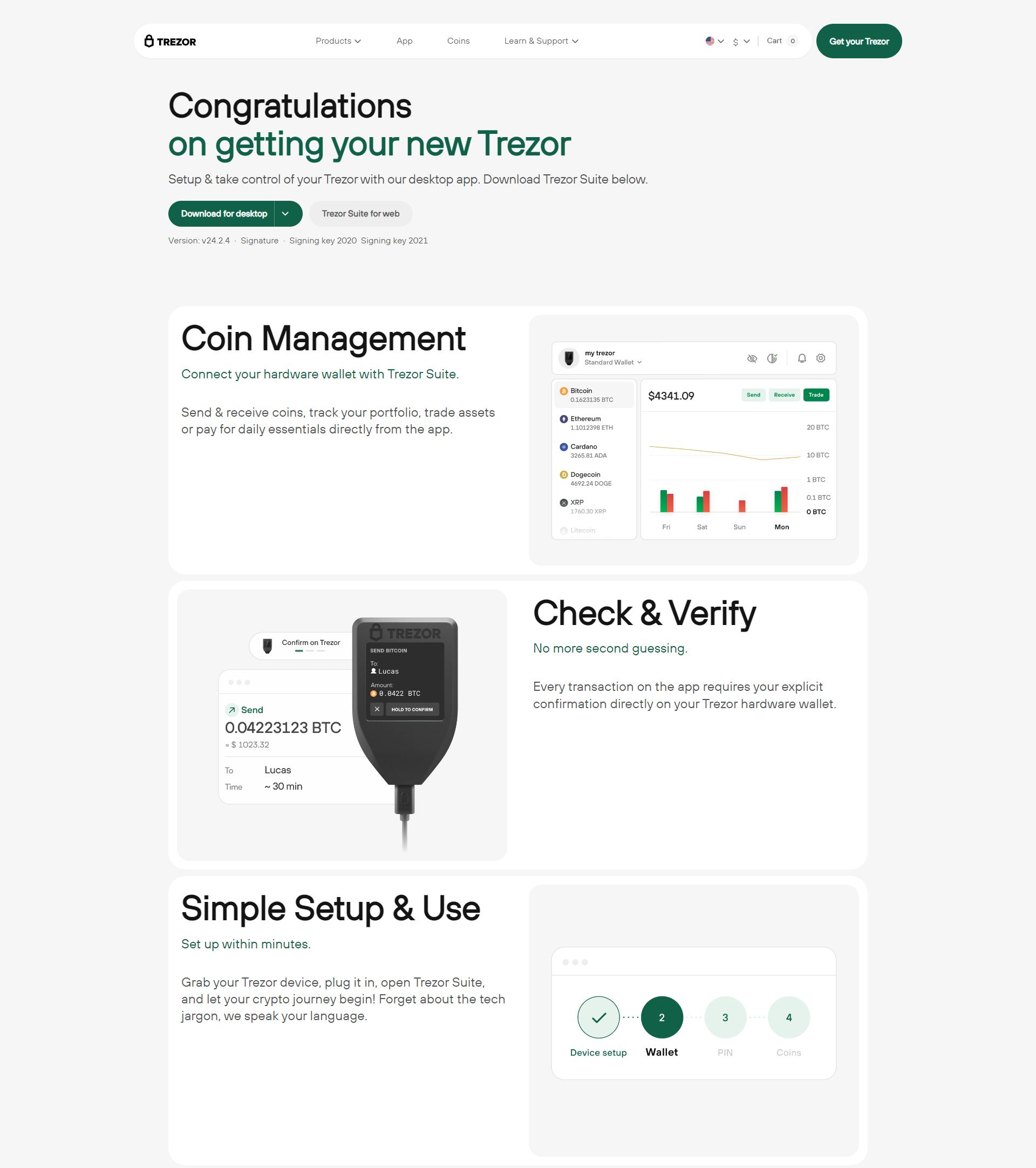
Once you confirm the device is genuine, go to the official portal and download Trezor Suite. Trezor Suite is the companion application used to configure the wallet, manage accounts, update firmware, and interact with supported cryptocurrencies. The software is designed to walk users through every step safely and clearly.
Initializing the Wallet
During initialization, you will be asked to choose a PIN. The PIN protects the device from unauthorized access and prevents someone else from using it if it is lost or stolen. After setting the PIN, the device generates a recovery seed, typically consisting of 12 or 24 words. This seed is the master backup and must be stored with extreme care.
The recovery words are the only way to restore your funds if the device is damaged or misplaced. For this reason, they should never be stored digitally. Many users prefer metal backup plates because they resist fire, water, and wear, offering long-term durability. Digital storage such as photos, cloud backups, or notes apps introduces risks and should be avoided entirely.
Managing Your Assets with Trezor Suite
After completing setup, Trezor Suite becomes your dashboard for managing cryptocurrencies. You can view balances, add accounts, monitor transaction history, and initiate transfers. The software supports many coins and tokens, and new assets continue to be added as demand grows. Despite this versatility, the core security model remains constant: transactions must be approved on the physical device before they are signed.
This physical verification ensures that even if the computer is compromised, no action can be taken without your consent. Advanced users can also use features such as passphrase support or integration with third-party services while keeping the private keys protected within the hardware.
Maintaining Long-Term Security
Owning a secure wallet does not remove the need for good practices. Users should never share their recovery seed, never enter it into websites, and always verify URLs carefully. Phishing attacks often replicate official portals, so caution is essential. Keeping firmware updated is also important because updates introduce new protections and fix vulnerabilities as they are discovered.
Conclusion
Trezor.io/start provides a safe and structured way to initialize one of the most trusted hardware wallets available today. With offline key storage, manual transaction verification, and an open-source design, Trezor delivers strong defenses against a wide range of threats. Proper setup, careful handling of the recovery seed, and ongoing security awareness ensure that your digital assets remain protected. As cryptocurrencies continue to evolve, hardware wallets like Trezor play a critical role in preserving financial autonomy and safeguarding value in a secure, user-controlled environment.